

Commitment: a simple word, a thousand realities. And yet… it’s where it all begins.
Rising turnover, complex recruitment, declining collective energy… The weak signals of disengagement are everywhere. And despite an avalanche of well-intentioned HR initiatives, many organizations are struggling to transform engagement into a genuine driver of sustainable performance.
Why? Because commitment cannot be decreed. It’s built, lived and shared.
But what exactly are we talking about when we talk about commitment?
It’s a chameleon word that crosses universes:
- Politics: defending a cause
- Artistic: asserting an intention
- Legal: respecting a contract
In the workplace, it goes far beyond the execution of a mission: it embodies personal involvement, collective responsibility and the desire to contribute to a common project. Commitment is a promise, a posture and a driving force.
The good news?
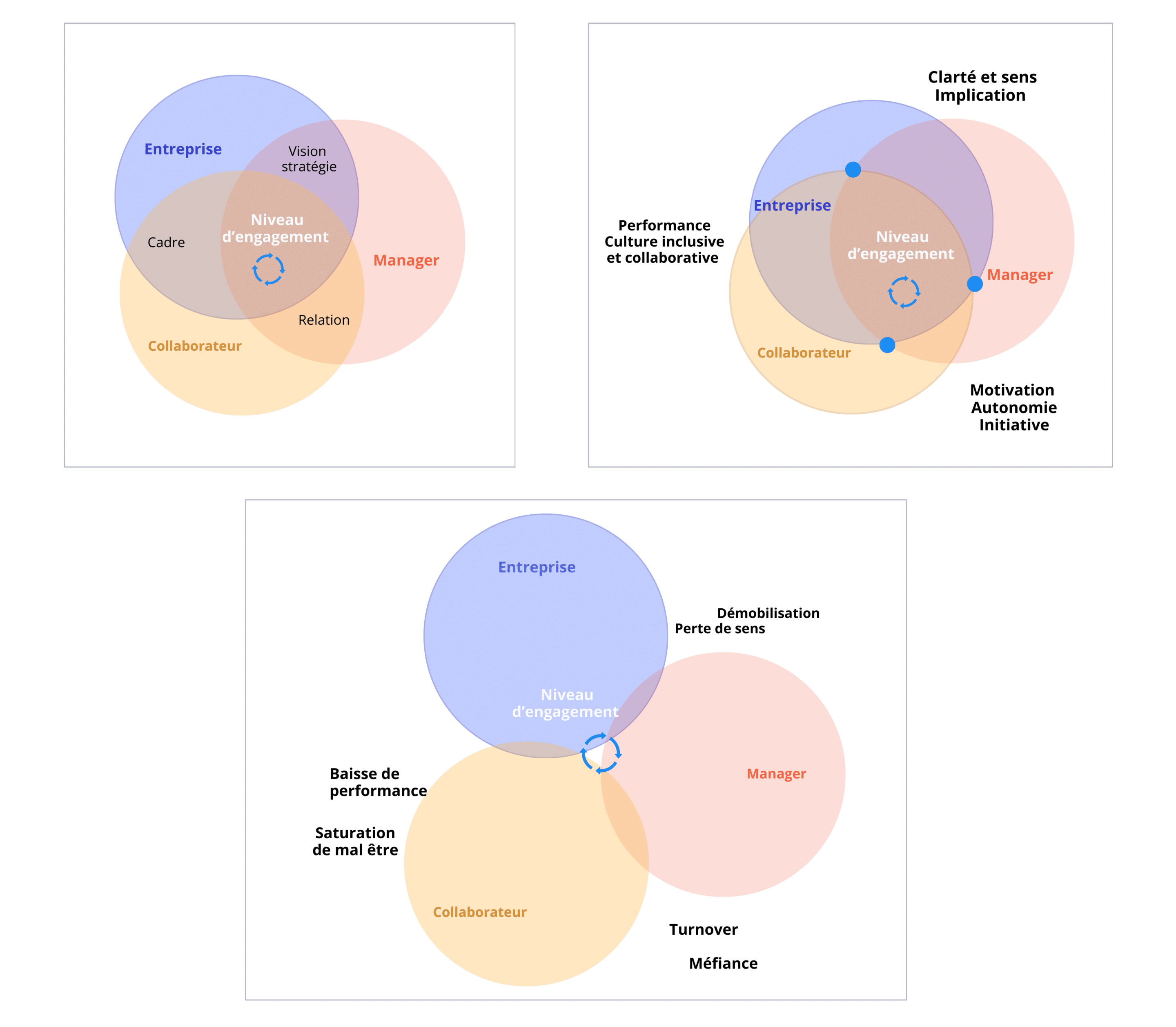
Commitment is not an innate gift: it’s an ecosystem. It is built at the intersection of three key players: the company, the manager and the employee.
Three roles, three responsibilities, one goal: to create a virtuous circle in which each contributes to, influences and strengthens the other.
This is exactly what I propose to explore in this article:
- understanding the driving forces behind commitment ;
- decipher the role of each player ;
- identify concrete levers to turn this into a strategic advantage.
Why is employee engagement a strategic HR issue?
Engaged employees are more productive, creative and loyal. Conversely, disengagement is costly: lower performance, turnover, loss of meaning. The Gallup survey of 2025 shows that only 8% of French employees say they are fully committed.
Organizations that succeed in creating an environment conducive to engagement enjoy concrete, measurable benefits.
This is why engagement will be a major strategic focus for human resources departments in 2026, on a par with digitalization and artificial intelligence.
The 3 pillars of commitment at work
Professional commitment is based on a balance between three interdependent players:
- The company: setting the framework, providing a strategic vision and clear perspectives.
- The Manager: who embodies this vision, creates a relationship of trust and fosters development.
- The Employee: who gets involved, takes initiative and evolves in a caring and demanding environment.
These three players are linked by a virtuous circle: vision – framework – relationship.
When one weakens, the overall level of commitment of the employee/manager can wane or even collapse, leading to departures and resignations.
What levers should be activated to boost engagement?
- Clarity and meaning: explaining the “why” behind each project helps employees understand their contribution to the overall strategy. This transparency reinforces a sense of belonging.
- Recognition: valuing individual and collective efforts and celebrating successes. It can take many forms, from positive feedback to recognition programs.
- Autonomy and empowerment: encouraging initiative-taking and delegating with confidence enable employees to feel involved in their work. This autonomy fosters commitment and creativity.
- Continuous development: offering progressive career paths and regular feedback helps meet talent’s expectations in terms of professional evolution.
- Inclusive and collaborative culture: creating an environment where everyone feels listened to and respected. Quality of working life (QWL) and employee well-being are HR priorities.
Commitment at SQORUS: our raison d’être
At SQORUS, commitment is our raison d’être.
We are putting this into practice through concrete actions:
- For our employees: ongoing training, personalized support, feedback culture.
- For our managers: benevolent leadership, transparency, co-construction of objectives.
- For our customers: a committed consultancy approach, guaranteeing the quality and relevance of our solutions.
Our ambition? To make commitment a sustainable driver of performance and attractiveness, by placing people at the heart of every project. Our aim? To help you better engage your employees.
How can SQORUS support you in your HR engagement strategy?
Thanks to our expertise in HR Council consulting, augmented by Digital, Data and Artificial Intelligence, we offer solutions dedicated to improving employee engagement:
- Diagnosis of commitment to identify priority levers.
- HR transformation programs integrating digitalization, performance and collaborative culture.
- PPIM and SWP roadmap
So, are you ready to make a commitment with us? Contact us to discuss your projects and find out how we can help you turn commitment into a real competitive advantage.
34 HR innovations and trends for 2025
Discover the latest HR innovations and trends and accelerate your digital transformation.